
Zimbabwe
Harare
This is where the 2027 tournament crosses a border and becomes a shared, three-country event. Harare gives the World Cup its smallest, closest ground and hands Zimbabwe a home stage again — a capital high on the plateau, built for sunshine.
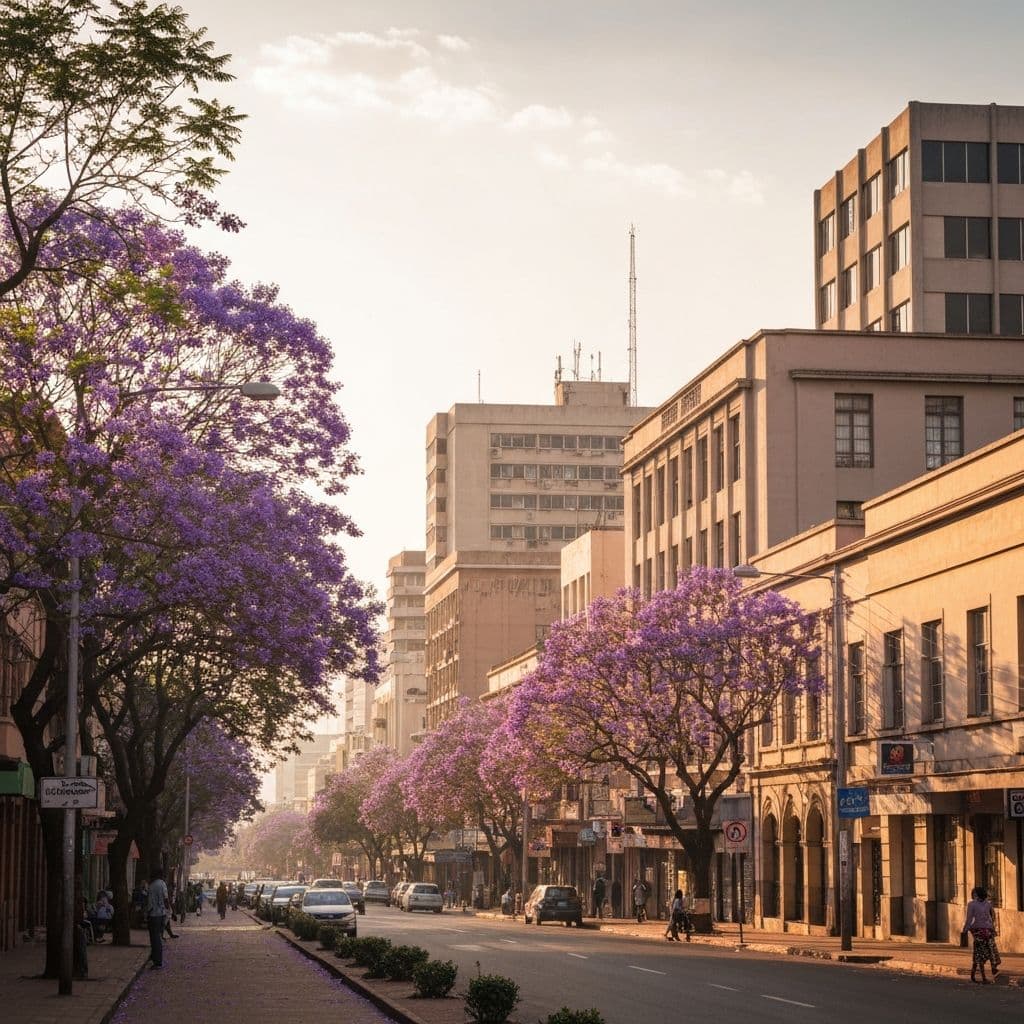
The co-host
Harare, Zimbabwe's World Cup stage
Almost every match of Cricket World Cup 2027 is played in South Africa. Harare is the exception that changes the shape of the whole trip. Fly north from Johannesburg for a little over an hour and you land in a different country, with its own currency habits, its own cricket story and a capital that feels nothing like the big South African host cities.
Zimbabwe is co-hosting this World Cup alongside South Africa and Namibia, and Harare is its main stage. For a travelling fan that makes the city more than a fixture on a list — it is the part of the tournament that turns a South African tour into a Southern African one. The best way to understand Harare is to start where the cricket is played, because the ground here is unlike anywhere else on the schedule.
The ground
Harare Sports Club, up close
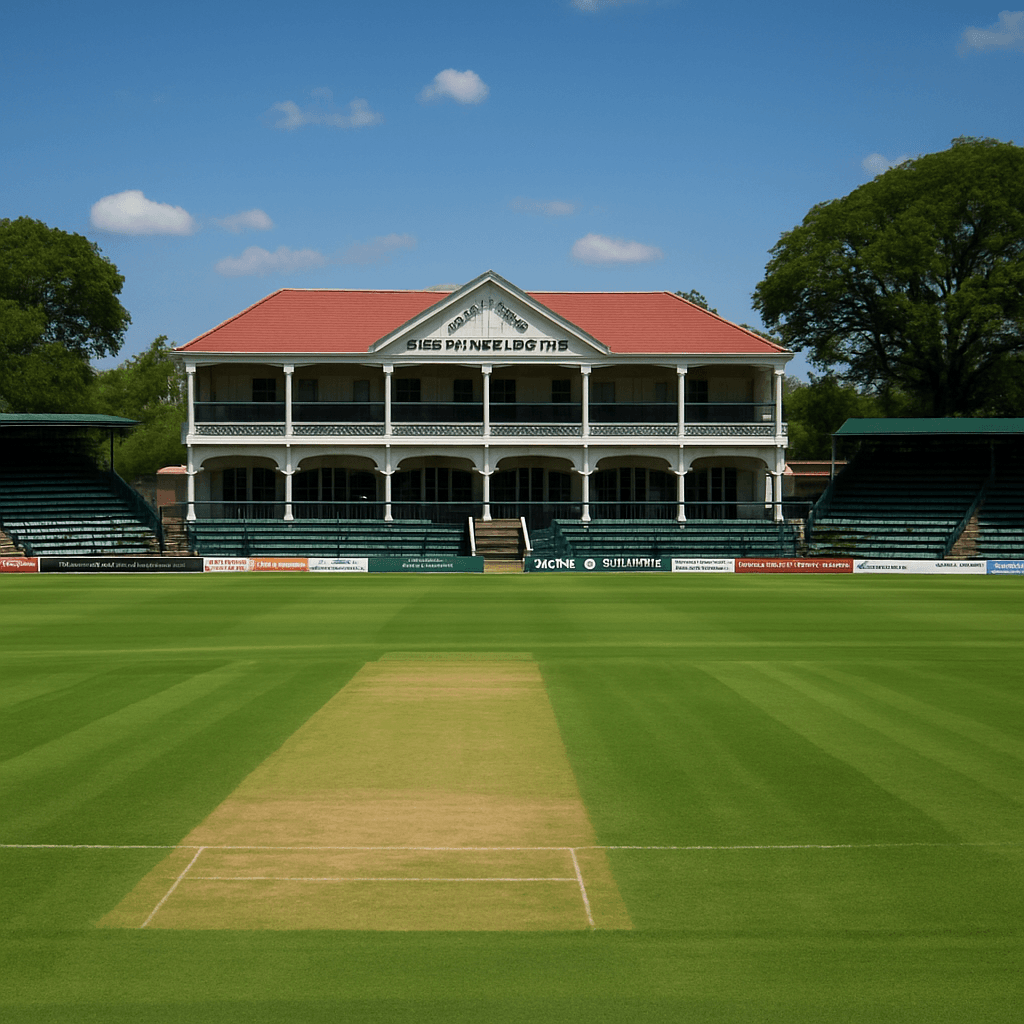
Harare Sports Club holds about 10,000 people. After the 60,000-seat South African arenas, that number is the point: this is a small ground, and it feels like one. It sits right in the middle of the city, next door to State House — the president's residence — and the Royal Harare Golf Club, ringed by trees, with an old pavilion and grass banks rather than towering concrete tiers. You are close enough to read the field.
It began life in 1900 as the Salisbury Sports Club, back when the city itself was called Salisbury. Its biggest day came in October 1992, when Zimbabwe played its very first Test match here, against India, days after being admitted as a full member of world cricket. Every international played on this ground since has been built on that afternoon.
Harare Sports Club is a confirmed venue for Cricket World Cup 2027. Which matches it will stage has not been published yet, so treat the fixtures as pending and watch the official ticket and fixture information as it is confirmed.
Match day
A high, bright day out
Because the ground is central, a match day is easy to build around: most visitors stay in the northern suburbs and come in by arranged car or a booked ride, which is the sensible way to travel here anyway. The small capacity means short walks, quick queues and a real sense of being part of a crowd rather than lost in one.
Keep the height in mind. Harare sits close to 1,500 metres on the Highveld, so the air is thin and dry — much like Johannesburg, it is the kind of ground where the ball can carry and a score can move quickly. The sun at that altitude is stronger than it feels, so a hat, sunscreen and water matter even when the temperature seems mild.
The city
The Sunshine City, explained
Harare is Zimbabwe's capital and its largest city, and it earned the old nickname the Sunshine City honestly: perched high on the plateau, it gets long runs of clear, mild days and cool, comfortable evenings. The height gives it a gentler climate than its latitude would suggest, and it is the same height that shapes the cricket.
The city was founded in 1890 as Fort Salisbury and kept the name Salisbury until 1982, two years after independence, when it became Harare. That recent renaming is a useful thing to carry around with you: the wide central streets and older public buildings belong to one era, while the name on the map and the life of the city belong to another. Both are part of the same place.
In colour
Msasa first, then jacaranda
Two trees give Harare its colour, and it is worth knowing which is which. The msasa is the local one, native to this part of Africa, and each spring — roughly August into September — its new leaves come out in red, orange, bronze and wine before they settle to green. It is the city's own signature, and it comes and goes a little before the cricket.
The jacaranda, brought here from South America long ago, flowers lilac around October and is the tree most likely to be in colour while the matches are on. So an honest word for a fan planning the trip: you may catch the tail of the msasa turn or the start of the jacaranda bloom, but neither is a fixed date. Treat the colour as a bonus, not a booking.
Neighbourhoods
Where to base yourself
Avondale
Central and easygoing, long popular with expats, with relaxed cafes, restaurants and a well-known weekly flea market. A good first base if you want to be near the middle of the city and the ground.
Borrowdale
The upscale northern suburb, built around the shops and restaurants of Sam Levy's Village. Comfortable and well-served, though you will rely on a car to get in and out.
Highlands
Leafy and quiet, part of the northern belt of garden suburbs, with boutique lodges and guesthouses. A calm place to sleep that is still within an easy ride of the cricket.
Mbare
The city's oldest high-density suburb and home to Mbare Musika, its big produce and crafts market. Not a place to stay but the most honest street-food and market visit in Harare — go by day, ideally with a local guide.
Food & culture
Sadza, markets and stone
The plate to understand is sadza: a thick maize-meal porridge eaten with a relish of meat, greens or beans. It is the centre of most Zimbabwean meals, and trying it — ideally the way it is served at a busy local spot rather than a hotel — tells you more about the place than any monument. Around it you will find street staples like maputi, puffed maize sold by the bag, and grilled meat.
Mbare Musika is the market end of the food story, cheap and full of life; the northern suburbs cover everything from cafes to sit-down restaurants, including the Portuguese and Asian kitchens that reflect the city's mix. For something distinctly Zimbabwean away from the table, the Chapungu Sculpture Park showcases Shona stone carving, an art form the country is genuinely known for.
Beyond the ground
Around the city, and onward
Close to the centre, the National Botanic Garden is an easy green half-day among indigenous Highveld plants, and the National Heroes Acre — the country's memorial and burial ground, set in hills just outside town — is worth reading up on before you visit, because the context is the point.
Harare is also the doorway to the rest of Zimbabwe, but be realistic about distance. Victoria Falls is about 880 kilometres away — a short domestic flight rather than a day trip — and the Eastern Highlands, Lake Kariba, Mana Pools and Hwange all deserve their own days. If you want to add wildlife or the Falls to the cricket, plan them as separate legs of the trip. Our safari guide and Victoria Falls guide cover those onward trips in full.
Straight talk
Money, visas and getting around
The single most useful thing to know about Harare is that Zimbabwe runs largely on US dollars, in cash. Bring clean, undamaged notes in small denominations — ones, fives, tens, twenties — and, where you can, notes printed after 2009, which are the ones most readily accepted. Cash machines are unreliable and cards work only at some hotels and lodges, so do not arrive expecting to tap or withdraw your way through the trip. As a current rule, you are not allowed to leave the country carrying more than 2,000 US dollars in cash.
Most visitors get a visa on arrival at Robert Gabriel Mugabe International Airport, which is about 15 kilometres south-east of the centre, 20 to 30 minutes by road. If you plan to pair the cricket with Victoria Falls, the KAZA UniVisa is worth knowing about: it covers Zimbabwe and Zambia for 30 days and allows day trips into Botswana. Visa costs and rules change, so confirm the current fee and terms before you fly, and see our visa guide for the detail.
For getting around, arrange transfers through your accommodation or hire a car with a driver; ride-hailing works but with limited availability, and the commuter minibuses are not made for visitors. Take the everyday precautions of any capital: stay in the well-used northern suburbs after dark, use booked transport at night, keep your passport in the hotel safe with a copy in your pocket, and steer clear of political gatherings. Zimbabweans have a strong reputation for looking after their guests, and most trips here are calm and warm.
Harare Travel Guide: Frequently Asked Questions
Everything you need to know about visiting Harare for a cricket trip — from airport transfers to match day experiences.
Why visit Harare for the Cricket World Cup 2027?
Harare is the capital of Zimbabwe, one of the three countries co-hosting the 2027 tournament alongside South Africa and Namibia. Its ground, Harare Sports Club, is small and tree-ringed, so you sit close to the play in a way the big South African stadiums cannot match. The city sits high on the Highveld, which keeps the weather mild, and it works as a starting point for the rest of Zimbabwe, including a short flight to Victoria Falls.
How do I get from Robert Gabriel Mugabe International Airport to Harare?
Robert Gabriel Mugabe International Airport (HRE) is about 15km south of the city centre, roughly 20-30 minutes by car. It handles international flights from Johannesburg, Dubai and regional destinations. A hotel transfer is the simplest option; taxis are available but agree the fare before you set off, and Uber runs here with limited availability. Carry some US dollars in cash for the trip in.
Where is Harare Sports Club and how do I get there?
Harare Sports Club sits in central Harare, next to State House and the Royal Harare Golf Club and close to the CBD and Harare Gardens. The ground was founded in 1900 as the Salisbury Sports Club and holds about 10,000 people. Because it is a compact, tree-ringed club ground rather than a large stadium, spectators sit near the action. It is a short trip from most city hotels and about 15-20 minutes from the airport, with parking on match days.
What are the key distances from Harare to major attractions?
Harare is a practical base for the rest of Zimbabwe. Victoria Falls is a short flight away, or a long day's drive of about seven hours. The Eastern Highlands offer cooler mountain scenery, and Lake Kariba is a place to see game from the water. For most World Cup visitors, internal flights make trips beyond the city far easier than driving.
| Destination | Distance | Travel Time |
|---|---|---|
| Victoria Falls | 880km (1hr flight) | 1 hour flight / 7 hours drive |
| Bulawayo | 440km | 5 hours |
| Eastern Highlands (Nyanga) | 270km | 3.5 hours |
| Lake Kariba | 370km | 4 hours |
| Hwange National Park | 700km | 7 hours |
What are the best transport options in Harare during the Cricket World Cup 2027?
Pre-arranged hotel transfers or hired cars with drivers are recommended for visitors. Uber operates in Harare with reasonable availability. Public transport (commuter omnibuses) is not recommended for tourists. For inter-city travel, domestic flights to Victoria Falls and Bulawayo are efficient. Car rental is available but hiring a driver is often practical.
- Hotel transfers (recommended)
- Uber (available)
- Hired car with driver
- Domestic flights (to Vic Falls/Bulawayo)
- Car rental
What is the weather like in Harare during the Cricket World Cup 2027?
October-November marks the end of Zimbabwe's dry season transitioning to early summer. Expect warm temperatures of 25-32°C (77-90°F). October can be the hottest month before rains arrive. November sees the start of afternoon thundershowers. Harare's altitude (1,500m) keeps evenings pleasant. Pack sunscreen and a light rain jacket.
What are the best areas to stay in Harare for the Cricket World Cup 2027?
Most visitors stay in the northern suburbs, which are quiet, green and well set up for travellers. Borrowdale has the widest choice of hotels, malls and restaurants; Avondale is closer in, with guesthouses, cafes and galleries; and Highlands is a calm residential option good for families. The CBD is nearest the cricket but quiet in the evenings. Borrowdale, Avondale or Highlands are the practical bases for a match trip.
Northern suburb with the widest hotel, mall and restaurant choice
Closer-in suburb with guesthouses, cafes and galleries
Quiet residential area with B&Bs, good for families
Nearest the ground; business hotels, quiet in the evenings
Leafy residential area with guesthouses
Which Harare neighbourhoods have the most character for a cricket trip?
Each part of the city reads a little differently. Borrowdale, in the north, is the modern hub of malls and hotels. Avondale is older and closer in, with a well-known shopping centre, cafes and galleries. The Meikles, an old Harare hotel, and the Rainbow Towers sit down in the CBD near the ground. Chisipite and Highlands are leafy, low-key residential areas with guesthouses. Pick the one whose feel suits the days you are not at the cricket.
How should I choose where to stay in Harare for the cricket?
One thing shapes every booking here: Zimbabwe runs largely on US dollars in cash, and card payment can be unreliable, so confirm with your hotel how it takes payment before you arrive and carry enough cash for day-to-day spending. Beyond that, base yourself for the trip you want. The northern suburbs (Borrowdale, Avondale, Highlands) are the usual choice for comfort and quiet, while the CBD puts you closest to the ground. Book early either way, as Harare has fewer rooms than the South African host cities and the World Cup will stretch supply.
What are the best restaurants in Harare for Cricket World Cup visitors?
Harare's dining is more varied than many visitors expect. Sam Levy's Village and the Borrowdale area hold much of the choice, while Avondale has cafes and restaurants closer to the centre. For local food, look for sadza with stew or grilled meat at a sit-down spot, and you will also find Portuguese, Chinese and Indian cooking that reflects the city's mix of communities.
What is the nightlife like in Harare during the Cricket World Cup?
Harare's evenings centre on Avondale and Borrowdale, with jazz clubs, live music and bars, plus cultural shows at Reps Theatre. After matches, the sports bars in the northern suburbs tend to fill up with fans, and weekends are the busiest nights. It is sensible to stick to known places in the northern suburbs and take an Uber or hotel car back rather than walking at night.
- Avondale (bars/restaurants)
- Book Café (live music)
- Borrowdale (upmarket)
- Sam Levy's Village
- CBD (limited at night)
Is Harare safe for Cricket World Cup 2027 visitors?
Harare is generally safe for tourists who take sensible precautions. The northern suburbs (Borrowdale, Avondale, Highlands) are well-secured. Avoid walking in the CBD at night. Use hotel taxis or Uber. Political situation has stabilized. Zimbabweans are known for warmth and hospitality. Carry USD cash as ATMs can be unreliable.
Safety Tips
- Stay in northern suburbs (Borrowdale, Avondale)
- Use Uber or hotel transport at night
- Avoid CBD after dark
- Carry USD cash
- Zimbabweans are very friendly and helpful
- Register with your embassy if concerned
What is the cricket atmosphere like at Harare Sports Club?
Harare Sports Club is a small, close-up ground. Grass banks and trees ring the field, and the modest capacity of around 10,000 keeps you near the players in a way the larger host stadiums do not. Zimbabwean crowds are warm and knowledgeable, and there is a real sense of occasion in the country co-hosting a World Cup. Expect a friendly, unhurried day rather than the scale and noise of the big South African venues.
What experiences are near Harare for Cricket World Cup visitors?
Harare works well as a starting point for the rest of Zimbabwe. Victoria Falls, one of the largest waterfalls on earth, is a short flight away. The Eastern Highlands offer cooler mountain scenery, and Mana Pools is known among safari-goers for walking safaris on foot. Many fans pair a few days of cricket in Harare with the Falls or a safari to round out the trip.
One of the largest waterfalls on earth, with activities and lodges
Walking safaris and wild camping; a UNESCO site
Mountains, hiking, cooler climate
Day trip, game viewing, water activities
Blue pools, diving, natural wonder