
South Africa
Johannesburg
Johannesburg is the largest of the three host cities and the only one built inland, at around 1,750 metres on the Highveld plateau. The Wanderers Stadium — the Bullring — sits in the northern suburbs, about 8 km from the old city centre. This guide covers the ground, the surrounding area, and what travelling fans need to plan a visit.
Last reviewed · July 2025
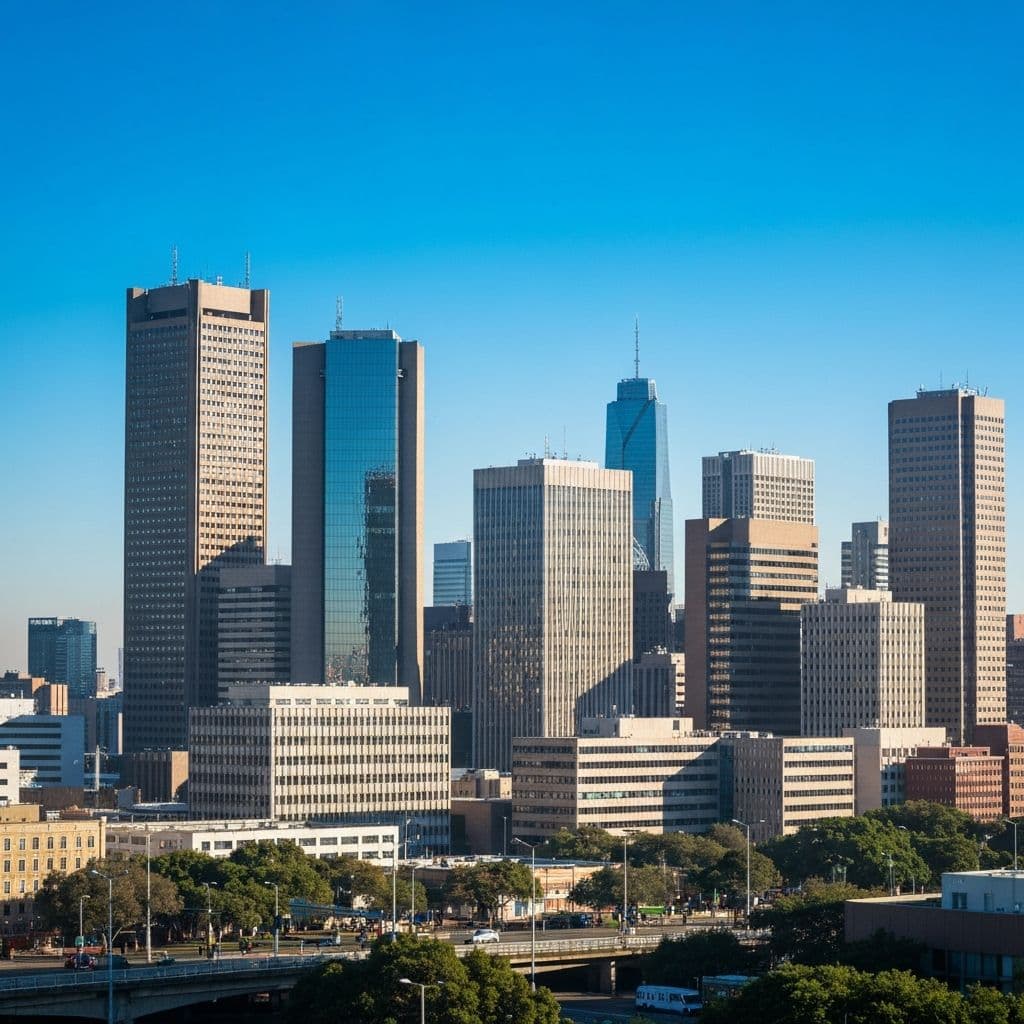
The city
Johannesburg sits on the interior plateau known as the Highveld, at around 1,750 metres above sea level. That altitude matters practically: it thins the air, sharpens the light, and, as any cricketer will tell you, helps the ball travel. It also means strong sun even when the air feels mild, and evenings cool faster than the daytime temperature suggests.
The city was founded in 1886, when gold was discovered on the Witwatersrand reef. The isiZulu and Sesotho name, eGoli, means place of gold. That origin still explains the shape of the city: the sprawl, the mix of people drawn from across the country and the continent, and the mine dumps still visible on the southern edges. Johannesburg is a working city, not a tourist one — which is part of what makes it worth more than match days.
The ground
The Wanderers, the Bullring
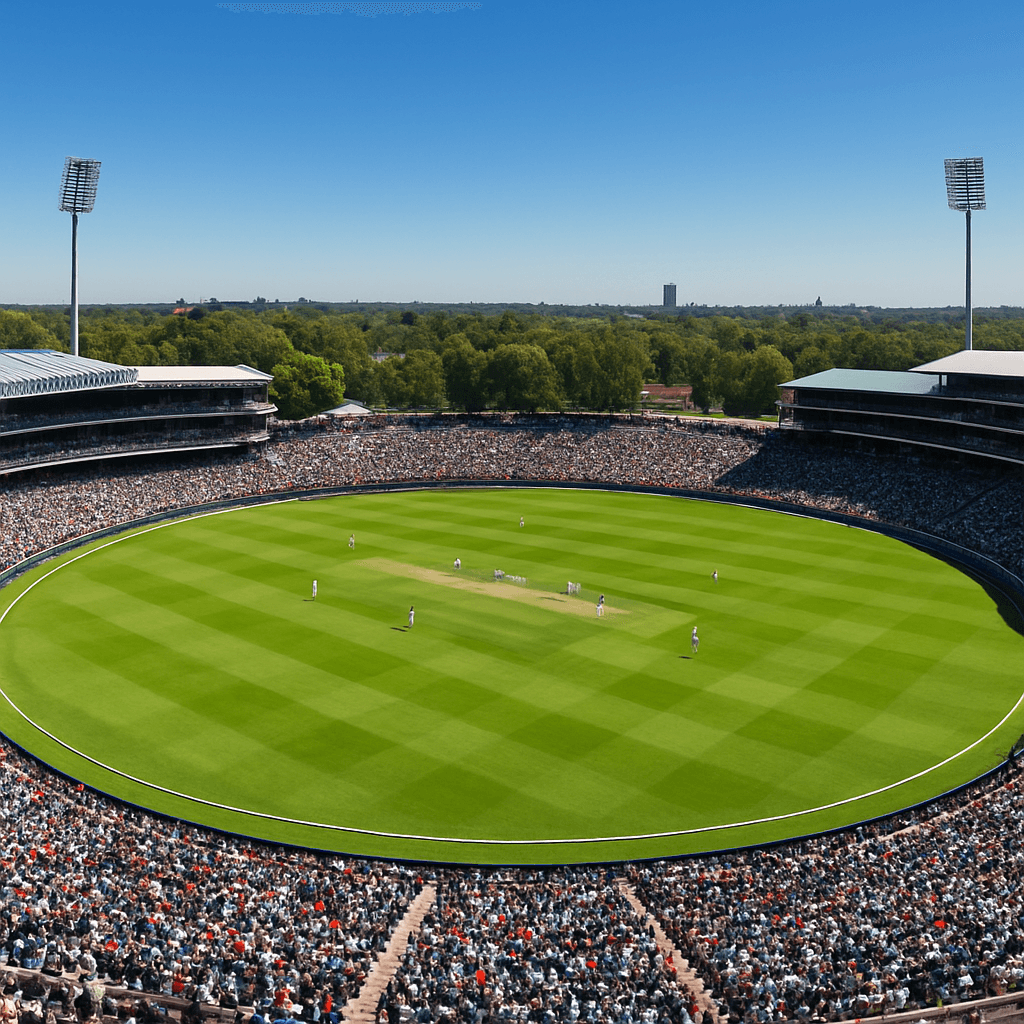
The Wanderers Stadium opened in 1956 and holds around 34,000 people, making it one of the larger grounds on the tour. Fans know it as the Bullring: the stands rise steeply and close to the boundary, so the crowd sits almost on top of the action and the noise has nowhere to go but back onto the field. It is the home of the Central Gauteng Lions and has a long reputation as a hard place for visiting teams to play.
Two matches fixed the ground in cricket memory. It hosted the final of the 2003 Cricket World Cup, and in 2006 it staged the one-day international between South Africa and Australia remembered simply as the 438 game, when South Africa chased down a record target on the last ball. The altitude is part of the ground's character: at roughly 1,750 metres, the thin Highveld air lets the ball carry, and batters know it.
Exactly which Cricket World Cup 2027 matches are played here will be confirmed by the ICC — keep an eye on the official ticket and fixture information as it is announced.
Match day
Getting the day right
The Wanderers sits in Illovo, just south of Sandton and about 8 km north of the old city centre. If you are staying in the northern suburbs — Sandton, Rosebank, Melrose — you are close, and the simplest way to the ground is e-hailing (Uber, Bolt), which is widely used across the city. The Gautrain will get you to Sandton or Rosebank station, and a short ride covers the last stretch.
Plan for traffic on a big match day and give yourself a buffer, especially in the afternoon build-up. Match-day parking around the ground is limited, so arranging transport in advance beats circling for a space. Afterwards, the Sandton and Rosebank areas have plenty of places to eat, so a relaxed dinner near your base is easier than heading across town.
The city
A city that gold built
To understand Johannesburg, start with the gold. When the main reef of the Witwatersrand was found in 1886, prospectors and workers arrived from everywhere, and a mining camp became a city at remarkable speed. The mine dumps on the southern edges and the sheer scale of the sprawl are the direct legacy of that rush.
That history is not only about wealth. Johannesburg grew up as a segregated city under colonial rule and then apartheid, and it became one of the central stages of the struggle against it. The best days out here are not about landscapes — they are about people and history. Give Johannesburg more than match days and it will teach you more about South Africa than anywhere else in the country.
Neighbourhoods
Where to base yourself
Sandton
The modern financial core, sometimes called the richest square mile in Africa. Most international visitors base themselves here: plenty of hotels, restaurants around Nelson Mandela Square, a Gautrain station, and the shortest run to the Wanderers. Safe and easy, if short on old-city character.
Rosebank
Smaller and more walkable than Sandton, on the same Gautrain line. Known for its galleries and the Rosebank Sunday market, it is a relaxed alternative that still keeps you close to the ground and to good food.
Braamfontein
The student quarter next to the University of the Witwatersrand, busy with cafes, bars and the Saturday Neighbourgoods Market. It has genuine inner-city energy and is best enjoyed by day and early evening.
Maboneng
A regenerated pocket on the eastern side of the inner city, built around galleries, studios and street art. Good for a daytime wander and a meal, and a useful window on the effort to bring the old centre back to life.
History
The days that matter most
If you do one thing beyond the cricket, make it Soweto. The township southwest of the city was the heart of resistance to apartheid, and Vilakazi Street is the only street in the world to have been home to two Nobel Peace Prize winners — Nelson Mandela and Archbishop Desmond Tutu. Mandela's former house is now a museum, and the nearby Hector Pieterson Museum records the 1976 student uprising. A guided visit is the sensible way to go, and adds the context that makes it land.
Closer to the centre, two places anchor the story. The Apartheid Museum walks you through the rise and fall of the system in a way that stays with you, and Constitution Hill — built on the site of the Old Fort prison that once held both Mandela and Gandhi — now houses the country's Constitutional Court. Together they are the clearest explanation of modern South Africa you can find in a day.
Food & drink
Eat the city's way
Johannesburg's food runs on two tracks. There is the polished restaurant scene of the northern suburbs — Sandton, Rosebank and the restaurant strip along Parkhurst's 4th Avenue — and there is the township and street-food tradition that tells you more about how the city actually eats. Look for shisa nyama, where meat is grilled to order over coals, often at a butchery-and-braai, and the kota, a hollowed-out quarter-loaf of bread packed with chips, polony, cheese and more.
For an easy first taste of the range, the Neighbourgoods Market in Braamfontein on Saturdays gathers dozens of local traders under one roof. If you take a guided Soweto tour, a stop for local food is usually part of it, and it is the most natural way to try the city's home cooking.
Day trips
Beyond the city
Johannesburg is a good base for a rest day between matches. About 50 km northwest, the Cradle of Humankind is a UNESCO World Heritage Site where some of the richest early-human fossil finds in the world have been made; the Sterkfontein Caves and the Maropeng visitor centre are the main stops. Pretoria, the administrative capital and itself a tournament host city, is only around 55 km north and easy to reach on the Gautrain.
For wildlife, you have options in both directions. Pilanesberg Game Reserve, roughly two hours away near Sun City, offers a malaria-free Big Five reserve that works as a long day or an overnight. The Kruger National Park is further — about four to five hours by road, or a short domestic flight — and is better suited to a dedicated few days than a single day trip. Check current park fees and opening times with the operators before you go, as they change.
Seasonality
When you'll be visiting
A Cricket World Cup 2027 trip lands you in Johannesburg's late-spring-into-summer window (October–November), which on the Highveld means warm days and the start of the afternoon-thunderstorm season. The pattern is usually a bright morning, some cloud building through the afternoon, and a short heavy storm that clears quickly. Treat these as tendencies rather than a schedule, and check a forecast close to your trip.
The altitude is the thing visitors underestimate. At around 1,750 metres the sun is strong even when the air feels mild, so sunscreen matters, and evenings can turn cool enough for a layer. Rain tends to come in bursts rather than all-day drizzle, so a light rain jacket is more useful than an umbrella.
Logistics
Getting there & around
O. R. Tambo International Airport is the busiest airport in Africa and the main gateway for the region, so many visitors to other host cities connect through here. It sits east of the city, and the quickest way into the northern suburbs is the Gautrain, which reaches Sandton in around 15 minutes. If you are planning fares and routes, our flights to Johannesburg guide is a useful starting point.
Around town, lean on the Gautrain for the airport and the Sandton–Rosebank–Pretoria corridor, and on e-hailing apps for everything else. Johannesburg is spread out and not built for walking between areas, so a booked ride is the norm rather than the exception. A hire car is handy for a self-drive day trip, but for daily city moves most visitors find e-hailing simpler.
Straight talk
Safety, honestly
Johannesburg asks for a bit more street sense than a beach town, and the honest framing is the useful one. Base yourself in the northern suburbs, use pre-booked or e-hailed transport rather than walking between areas, keep phones and valuables out of sight, and use ATMs inside malls rather than on the street. The Gautrain is a safe, easy way to move on its corridor. For places like Soweto and the inner city, go with a guide rather than wandering alone.
Because advice and specifics change, check current government travel guidance for your country before you go, and see our South Africa safety guide for a fuller picture.
Johannesburg Travel Guide: Frequently Asked Questions
Everything you need to know about visiting Johannesburg for a cricket trip — from airport transfers to match day experiences.
Why visit Johannesburg for the Cricket World Cup 2027?
Johannesburg is South Africa's largest city and home to the Wanderers, one of cricket's loudest and most atmospheric grounds — nicknamed the Bullring. It is a working city built on the 1886 gold rush, and its best days out are about history and culture: Soweto, Constitution Hill and the Apartheid Museum. Most visitors base themselves in the greener north around Sandton and Rosebank, a short hop from the ground.
How do I get from OR Tambo International Airport to Johannesburg?
OR Tambo International Airport (JNB) is Africa's busiest airport, located 24km east of the city centre and 35km from Sandton. The Gautrain rapid rail connects the airport to Sandton in 15 minutes (R185) and to Rosebank in 19 minutes. Uber is widely available (R250-400 to Sandton). For Cricket World Cup visitors, the Gautrain is the fastest and safest option.
Where is Wanderers Stadium and how do I get there?
Wanderers Stadium is located in Illovo, Sandton, approximately 8km north of the Johannesburg CBD. Known as 'The Bullring' for its steep stands and intimidating atmosphere, it holds 34,000 spectators. The stadium is easily accessible via Uber from Sandton (10 min) or the Gautrain to Rosebank station (then 10-min Uber). Limited match day parking is available.
What are the key distances from Johannesburg to major attractions?
Johannesburg is centrally located in Gauteng province with excellent road connections. Pretoria is just 55km north, making it easy to attend matches at both venues. Kruger National Park is a scenic 4-5 hour drive or short flight away.
| Destination | Distance | Travel Time |
|---|---|---|
| Pretoria/Centurion | 55km | 45-60 min |
| Kruger National Park | 420km | 4.5 hours |
| Sun City | 170km | 2 hours |
| Pilanesberg Game Reserve | 150km | 2 hours |
| Cradle of Humankind | 50km | 45 min |
What are the best transport options in Johannesburg during the Cricket World Cup 2027?
The Gautrain is the safest and most efficient way to travel between key areas (Sandton, Rosebank, Hatfield, OR Tambo). Uber and Bolt are essential for last-mile transport and are widely used. Avoid public minibus taxis as a tourist. Car rental is useful for safari trips but not recommended for daily city travel due to security concerns.
- Gautrain rapid rail
- Uber/Bolt ride-sharing
- Hotel shuttles
- Car rental (for safaris)
- Metered taxis from hotels
What is the weather like in Johannesburg during the Cricket World Cup 2027?
October to November in Johannesburg marks the start of summer, with warm days and the chance of a short afternoon thunderstorm that usually clears quickly. Pack sunscreen, a light rain jacket, and layers for cooler evenings. The altitude (around 1,750m) means the sun is strong even on cloudy days. Check a forecast close to your trip.
What are the best areas to stay in Johannesburg for the Cricket World Cup 2027?
For Cricket World Cup visitors, Sandton is the top recommendation — safe, upscale, close to Wanderers Stadium, with excellent hotels and dining. Rosebank offers a more artistic vibe with good Gautrain access. Melrose Arch provides a walkable village feel. Avoid the CBD unless on a guided tour.
Financial hub with plenty of hotels, closest to the Wanderers, well served by the Gautrain
Artsy suburb with galleries, markets, good Gautrain access
Secure precinct with hotels, restaurants, walkable streets
Regenerated area with street art, markets, trendy cafes (day visits)
Suburban area with malls, family-friendly, 20 min from stadium
Which Johannesburg neighbourhoods have the most character for a cricket trip?
Each area reads differently. Sandton is the modern financial core, secure and well served by hotels and the Gautrain, and it is closest to the Wanderers. Rosebank is smaller and more walkable, with a weekend rooftop market. Braamfontein is the lively student quarter next to Wits, and Maboneng is the inner-city arts district — both best by day. Soweto is where the country's modern history sits, and is worth a guided visit rather than an overnight base.
How should I choose where to stay in Johannesburg for the cricket?
Base yourself around what matters most on a match trip. Sandton keeps you closest to the Wanderers and on the Gautrain line, which makes airport and match-day travel simple. Rosebank is a shorter, more relaxed alternative on the same rail corridor. Braamfontein and Maboneng are cheaper and more characterful but better suited to day visits than an overnight base. Wherever you stay, plan to use the Gautrain and e-hailing rather than walking between areas, and book the well-placed rooms early for October and November.
What are the best restaurants in Johannesburg for Cricket World Cup visitors?
Johannesburg's dining runs from restaurants in Sandton, Rosebank and Parkhurst to township food traditions like shisa nyama (meat braaied on the spot) and the kota, a filled quarter-loaf. The Neighbourgoods Market in Braamfontein on Saturdays is an easy place to try a range of local food in one visit.
What is the nightlife like in Johannesburg during the Cricket World Cup?
Johannesburg's nightlife is concentrated in secure areas. Sandton has rooftop bars and sophisticated lounges. Rosebank offers cocktail bars and live music venues. Parkhurst's 4th Avenue is famous for its restaurant and bar strip. Always use Uber and stick to well-known establishments.
- Sandton (rooftop bars)
- Rosebank (cocktail lounges)
- Parkhurst 4th Avenue (strip of bars)
- Melrose Arch (precinct bars)
- Maboneng (day/early evening only)
Is Johannesburg safe for Cricket World Cup 2027 visitors?
Johannesburg requires more caution than Cape Town but is safe for tourists who follow guidelines. Stay in Sandton, Rosebank, or Melrose Arch. Always use Uber or Bolt — never walk on streets at night. Avoid displaying valuables. Don't use ATMs on the street. The Gautrain is safe and efficient. Most incidents involve opportunistic crime, which is preventable.
Safety Tips
- Stay in Sandton, Rosebank, or secured precincts
- Always use Uber/Bolt, never walk at night
- Use ATMs inside shopping malls only
- Keep valuables hidden and phones out of sight
- Use hotel security services
- Book guided township tours, don't go independently
What is the cricket atmosphere like at Wanderers Stadium?
The Wanderers is nicknamed the Bullring because its steep stands ring the field closely and hold the crowd noise in. South African supporters are loud and involved, and the ground has a long reputation for a strong home atmosphere, especially for big matches. Expect a busy, vocal crowd rather than a quiet day at the cricket.
What experiences are near Johannesburg for Cricket World Cup visitors?
Johannesburg is the gateway to incredible experiences. Kruger National Park safaris are 4-5 hours away or accessible by short flight. The Cradle of Humankind UNESCO site offers a journey through human evolution. Soweto tours provide cultural and historical insight. Sun City resort offers entertainment just 2 hours away.
Big Five safari, lodges at a range of prices
Malaria-free Big Five safari day trip
Essential South African history experience
Mandela House, historical townships
UNESCO site, origins of mankind