
South Africa
Cape Town
Cape Town is one of the three host cities and the only South African venue with an established Test history. Newlands sits in the southern suburbs, about 6 km from the city centre, with Table Mountain directly behind the ground. This guide covers the ground, the surrounding area, and what travelling fans need to plan a visit.
Last reviewed · July 2025
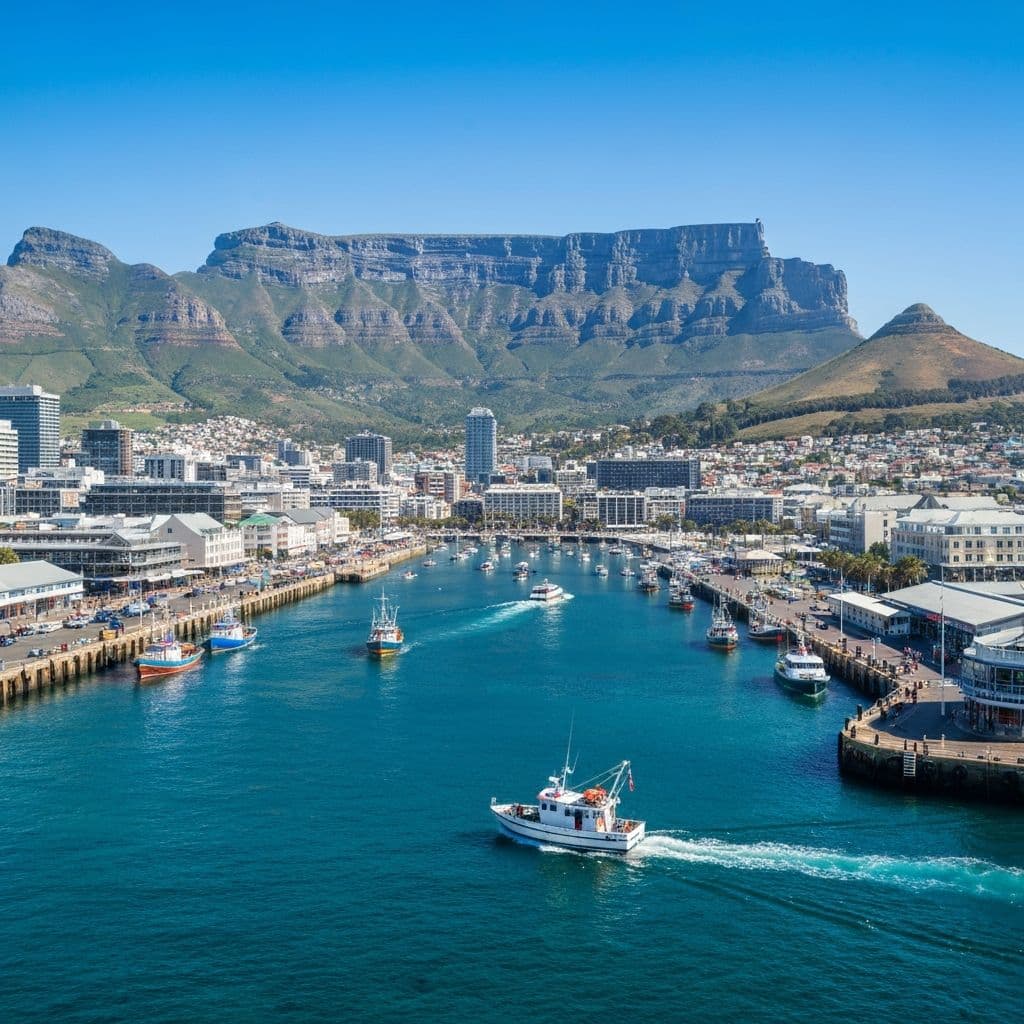
The city
Cape Town sits on the northern tip of the Cape Peninsula, with Table Mountain separating the Atlantic seaboard from the warmer False Bay coast. The two sides of the city feel different and have different transport links, so knowing which one your accommodation is on matters when planning matchdays.
Newlands is in the southern suburbs, on the False Bay side of the mountain. It is closer to Stellenbosch and the Winelands than it is to the V&A Waterfront or the Atlantic beaches. That geography shapes how most visiting fans orient themselves here.
The ground
Newlands, under the oaks
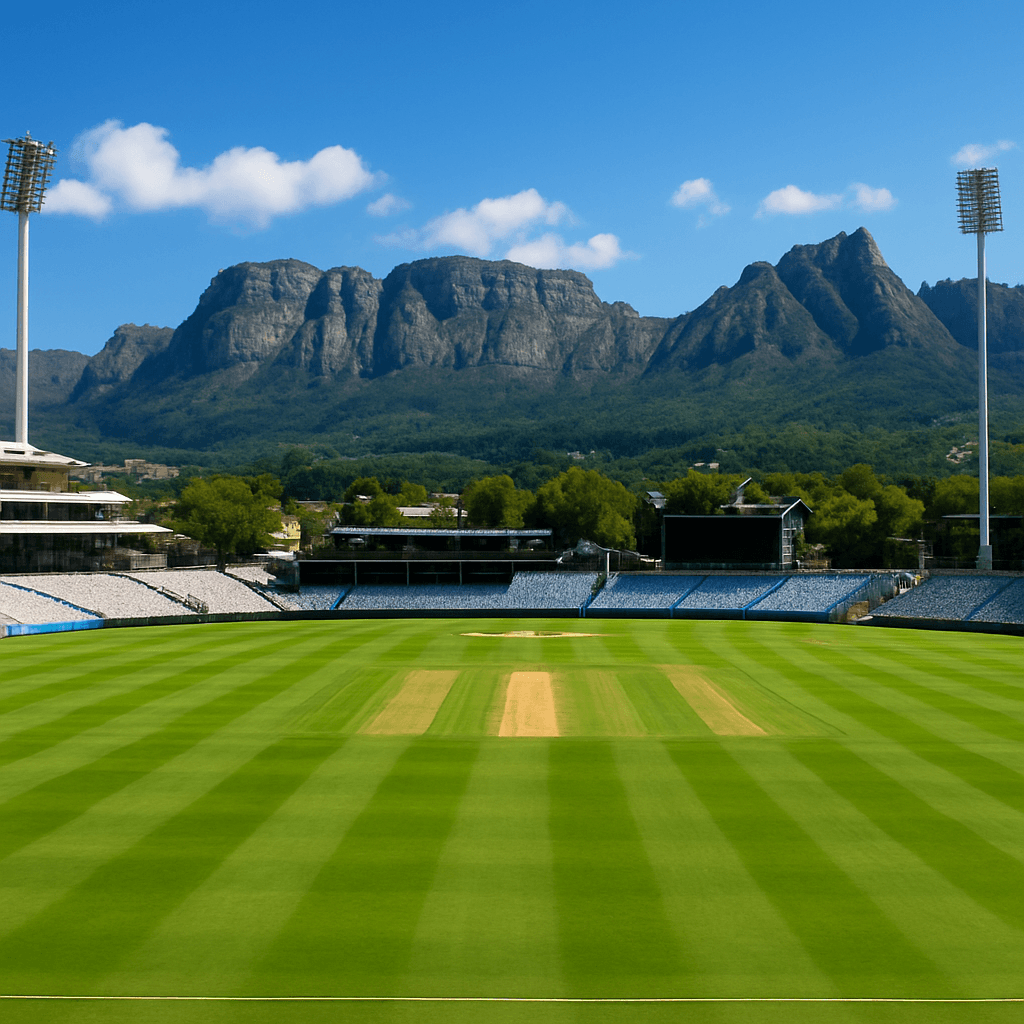
Ask cricket lovers to name the game's most beautiful ground and Newlands comes up again and again. It opened in 1888 and staged its first Test in 1889, making it one of the oldest Test grounds still in use anywhere. The oak trees that shade the famous Oaks Enclosure replaced the original pines in 1902 — fans have picnicked under that canopy for well over a century.
What you remember, though, is the view. Table Mountain and Devil's Peak rise over the sightscreen, and on a clear day it is genuinely a reason to be in the ground rather than in front of a television. Arrive early, claim a spot on the grass banks, and let the afternoon mountain shadow and the south-easter wind do their thing to the conditions. With a capacity of around 25,000, it keeps the garden-party feel that stadium bowls lose.
Newlands is Cape Town's home of international cricket. Exactly which Cricket World Cup 2027 matches are played here will be confirmed by the ICC — keep an eye on the official ticket and fixture information as it is announced.
Match day
Getting the day right
Newlands is in the southern suburbs, a short hop from the leafy village feel of Newlands and Claremont rather than the city centre. Give yourself a comfortable buffer from wherever you are staying — traffic around the ground builds on a big day, and e-hailing (Uber, Bolt) is the simplest way in and out. If you are driving, plan parking in advance rather than circling.
The ritual here is unhurried: get in early, settle on the banks or under the oaks, and treat the day as a picnic that happens to have cricket attached. Layers matter — the Cape weather can turn, and the wind that clears the air can also take the warmth out of a late session. Afterwards, the surrounding suburbs are full of places to eat, so a relaxed post-match dinner nearby beats racing back across town.
The city
Why Cape Town gets under your skin
Cape Town began in 1652 as a Dutch East India Company refreshment station: a garden planted to feed ships rounding the Cape, with the first soil turned in what is now the Company's Garden. That origin is still walkable today — the oldest cultivated ground in the country is a shady public park a few minutes from Parliament. It also explains the city's deeper character: a centuries-old crossroads of people, cultures and cooking that you can still taste and see in its neighbourhoods.
The starkest chapter of that story sits out in Table Bay. Robben Island, where Nelson Mandela was held for 18 of his 27 years in prison, is now a museum reached by ferry from the V&A Waterfront, with tours led by former political prisoners whose first-hand accounts are the point of going. Sailings are weather-dependent and sell out well ahead in a busy period, so book as soon as your dates are fixed.
That is the real pull of the place. The mountain and the beaches get the postcards, but what stays with you is a city with layers — a founding-era garden, a freedom story painted onto a hillside, an empty stretch of inner-city land that explains modern South Africa. Give it more than match days and it rewards you: our Cape Town itinerary sketches how to sequence a few days around a fixture, and the wider things to do during Cricket World Cup 2027 guide looks beyond the Cape to the other host countries.
Neighbourhoods
Where the city tells its story
Bo-Kaap
Not just "the colourful houses". Bo-Kaap is Cape Town's oldest surviving residential neighbourhood, on the slopes of Signal Hill, and the historic heart of the Cape Malay Muslim community. The vivid house colours are widely read as a symbol of freedom — painted after residents won the right to own their homes. Walk the cobbled upper streets, but come for the story and the food.
District Six
A mixed, working-class inner-city community until the apartheid government declared it white-only in 1966, forcibly removing more than 60,000 residents. Much of the land still sits empty — a visible scar — and the District Six Museum keeps the community's memory. A short, sobering counterweight to the holiday framing, and real context for the country you are visiting.
Woodstock
Historically industrial, regenerated from the mid-2000s around the Old Biscuit Mill, and known with neighbouring Salt River for its street-art scene. Good for a design-and-market morning — worth knowing the redevelopment carries real displacement tension, which locals do not shy away from.
Sea Point & Kalk Bay
Sea Point's ocean promenade is where the city walks, jogs and watches the sunset — the free, everyone's-here counterpoint to ticketed attractions. Over on the warmer False Bay side, Kalk Bay is a working fishing harbour with a main road of antique shops and cafés: a good half-day stop en route to the penguins.
Day trip
The Peninsula day
If you do one big day out, make it the Peninsula loop: Kalk Bay for coffee, the African penguin colony at Boulders near Simon's Town, then the high cliffs of Cape Point and the Cape of Good Hope, looping back along the coast via Chapman's Peak. It is a full day, and the best way to understand why people fall for this coastline.
Boulders and Cape Point are both managed by SANParks and charge a conservation fee (cashless), and Cape Point is roughly an hour to ninety minutes south of the city. Fees and opening details change, so check current rates and times with SANParks before you go, and start early to stay ahead of the crowds and the wind.
Rest day
A day in the Winelands
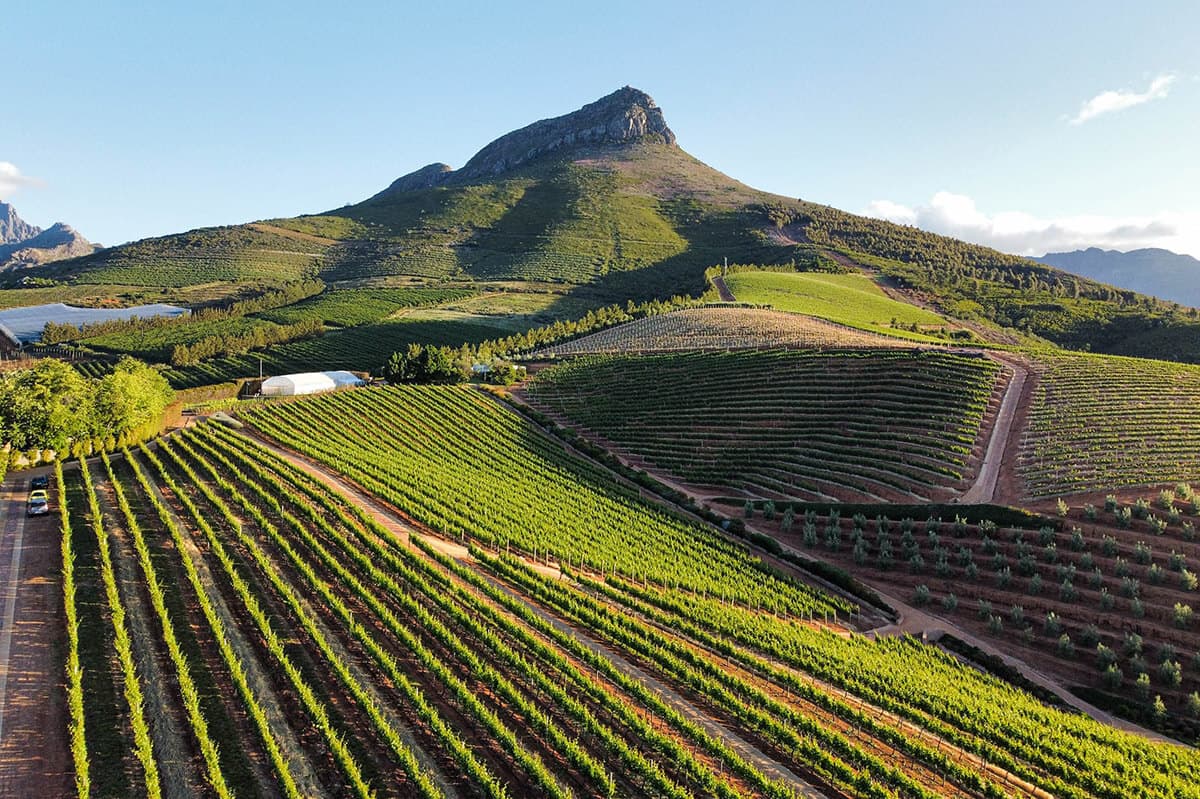
A rest day between matches is well spent in the Cape Winelands, and it pays to know the two headline towns are not interchangeable. Stellenbosch is the older, oak-lined university town with Cape Dutch gables and a walkable centre; Franschhoek leans into French Huguenot heritage and fine dining in a valley of estates. Stellenbosch sits around 50 km from the city; Franschhoek is a little further, with the two roughly 20–30 minutes apart.
Because tasting is the point, a guided tour or a booked driver is the sensible move — it lets everyone taste responsibly and takes the mountain-pass driving off your plate. If you want to line this up around your fixtures, our Cape wine-tasting guide goes deeper on the regions.
Food & drink
Eat like you're paying attention
Cape Town's signature cuisine is Cape Malay — a creolised tradition born from the Southeast Asian, Indian and African people brought to the Cape from the 17th century, centred on Bo-Kaap. It fuses Eastern spices like cinnamon, cardamom, cloves and turmeric with Dutch and indigenous African cooking. Look for bobotie (spiced minced meat under an egg-custard topping) and slow-cooked bredie stews.
The detail visitors get wrong: a Cape Malay koesister is a spiced, coconut-dusted doughnut — quite different from the syrupy plaited Afrikaner koeksister. A Bo-Kaap food walk or cooking class is the best way in. For weekend mornings, the Oranjezicht City Farm Market at Granger Bay and the Neighbourgoods Market at the Old Biscuit Mill in Woodstock are where the local-food and changing-neighbourhood threads meet.
Views
Earn the mountain
Table Mountain is the obvious one, reached by the aerial cableway when the weather allows — the south-easter (the "Cape Doctor") can close it, so treat a clear morning as your cue to go. Hours and fares are seasonal and change, so confirm with the Table Mountain Aerial Cableway on the day.
For golden hour on a budget, two favourites: Lion's Head, a moderate round-trip hike of roughly 5.5 km with 360-degree views (the optional chain-and-ladder scrambles can be bypassed), and Signal Hill, a drive-up sunset spot over the city and the Atlantic — arrive 30–40 minutes early for space. From Signal Hill's lower slopes the Noon Gun still fires every weekday at midday, a free bit of theatre you can hear across the centre. And for an easy, no-cost afternoon, Green Point Urban Park beside the stadium has fynbos gardens and a running track that locals use year-round. These are the evenings and hours that make the days around match days.
Seasonality
When you'll be visiting
A Cricket World Cup 2027 trip lands you in the Western Cape's spring-into-summer window (October–November): lengthening days, long evenings and beach afternoons, with whales still possible in False Bay early on. Expect typical October highs of around 18–22°C warming into November highs of around 23–25°C, with cooler nights — treat these as guides, not guarantees.
The south-easter is part of the deal. It clears the air and cools the afternoons, and it is exactly why cableway and Peninsula plans work best as "go when it's clear" decisions rather than fixed appointments.
Logistics
Getting there & around
Cape Town International Airport is around 20 km from the city centre, typically 20–30 minutes by road depending on traffic. From further afield, many travellers connect through Johannesburg. If you are planning fares and routes, our flights to Cape Town guide is a useful starting point. For getting around the country more widely, see our South Africa travel guide.
Around town, Cape Town is friendly to both self-driving and e-hailing, and because the best experiences are spread around the Peninsula, a car or a booked driver unlocks the most. There is a MyCiTi bus network including an airport route, but timetables and routes have changed over the years, so check the official MyCiTi site or app for current details rather than relying on old information.
Straight talk
Safety, honestly
Cape Town carries South Africa's general high-caution safety profile, and the honest framing is the useful one: use reliable, pre-booked or e-hailed transport, be aware of your route (official advice is to stick to main roads to and from the airport), and don't flash valuables. None of this is unusual for a major world city, and it should not put you off — it should just shape how you move.
Because advisories and specifics change, check current government travel advice for your country before you go, and see our South Africa safety guide for a fuller picture.
Cape Town Travel Guide: Frequently Asked Questions
Everything you need to know about visiting Cape Town for a cricket trip — from airport transfers to match day experiences.
Why visit Cape Town for the Cricket World Cup 2027?
Cape Town is South Africa's most iconic destination, offering a perfect blend of natural beauty, world-class dining, and unforgettable cricket at Newlands Cricket Ground. With Table Mountain as a backdrop, stunning beaches, and the renowned Cape Winelands just 45 minutes away, Cape Town delivers a premium Cricket World Cup 2027 experience that combines sport with luxury travel.
How do I get from Cape Town International Airport to the city centre?
Cape Town International Airport (CPT) is located 20km from the city centre, approximately 20-30 minutes by car depending on traffic. The airport offers excellent connections with Uber, metered taxis (around R350-450), and the MyCiTi bus service. For Cricket World Cup visitors, we recommend pre-booking airport transfers or using ride-sharing apps for convenience.
Where is Newlands Cricket Ground and how do I get there?
Newlands Cricket Ground is located in the Southern Suburbs, approximately 8km from the city centre. This historic venue, opened in 1888, holds 25,000 spectators and offers breathtaking views of Table Mountain and Devil's Peak. The stadium is accessible via MyCiTi bus, Uber, or the Southern Suburbs railway line. Match day parking is limited, so public transport or ride-sharing is recommended.
What are the key distances from Cape Town to major attractions?
Cape Town is perfectly positioned for exploring the Western Cape. The Cape Winelands (Stellenbosch, Franschhoek, Paarl) are 45-60 minutes away, while Cape Point and the Cape Peninsula make for excellent day trips at just 1-1.5 hours.
| Destination | Distance | Travel Time |
|---|---|---|
| Stellenbosch Wine Region | 50km | 45 min |
| Franschhoek | 75km | 1 hour |
| Cape Point | 70km | 1.5 hours |
| Hermanus (whale watching) | 120km | 1.5 hours |
| Garden Route (start) | 340km | 4 hours |
What are the best transport options in Cape Town during the Cricket World Cup 2027?
Cape Town offers multiple transport options. Uber and Bolt are widely available and affordable. The MyCiTi bus network covers major tourist areas including the airport, V&A Waterfront, and city centre. For match days, consider pre-booking transfers or using ride-sharing apps. Car rental is recommended for exploring the Cape Peninsula and Winelands.
- Uber/Bolt ride-sharing
- MyCiTi bus network
- Metered taxis
- Car rental
- Hop-on hop-off tourist buses
What is the weather like in Cape Town during the Cricket World Cup 2027?
The Cricket World Cup 2027 runs from October to November, which is Cape Town's spring season. Expect pleasant temperatures averaging 18-24°C (64-75°F) with occasional rain showers. Pack layers as evenings can be cool, and always have sunscreen ready for outdoor match days.
What are the best areas to stay in Cape Town for the Cricket World Cup 2027?
For Cricket World Cup visitors, the best areas to stay depend on your priorities. The V&A Waterfront offers premium hotels and entertainment. Camps Bay provides luxury beachfront living. The City Bowl is central and convenient. Claremont and Newlands are closest to the cricket stadium.
Premium hotels, restaurants, shopping, and entertainment hub
Stunning beachfront with luxury apartments and trendy restaurants
Central location with mix of boutique hotels and guesthouses
Closest to stadium, suburban feel with good dining options
Beachfront promenade, mix of hotels, easy Uber access to stadium
Which Cape Town neighbourhoods have the most character for a cricket trip?
Each part of the city reads differently. The Southern Suburbs around Newlands are leafy and walkable to the ground; the V&A Waterfront is polished and central; Sea Point and Camps Bay trade on the Atlantic seaboard and long sunset walks; Constantia sits among working wine estates; and Bo-Kaap and Woodstock carry the city's most distinctive local culture. Pick the one whose mood fits the days you are not at the cricket.
How should I choose where to stay in Cape Town for the cricket?
Base yourself around what matters most on a match trip. Staying in the Southern Suburbs near Newlands cuts match-day travel to a short hop, which counts for a lot on a busy fixture day. The V&A Waterfront and Atlantic seaboard put you closer to restaurants, the sea and evening life but add a 15-20 minute ride to the ground. Guesthouses and self-catering flats in areas like Observatory, Green Point or Woodstock keep things simple, while the waterfront and beachfront hold the city's most established hotels. Book early: October to November is peak season and the best-placed rooms go first.
What are the best restaurants in Cape Town for Cricket World Cup visitors?
Cape Town is a culinary destination with diverse dining options. From award-winning fine dining to casual seafood spots, there's something for every taste. Don't miss the opportunity to pair world-class wine with local cuisine.
What is the nightlife like in Cape Town during the Cricket World Cup?
Cape Town has a vibrant nightlife scene. Long Street in the City Bowl is famous for bars and clubs. The V&A Waterfront offers sophisticated lounges and rooftop bars. Camps Bay features beachfront sunset cocktails. After match days, expect cricket fans to gather at sports bars and pubs throughout the city.
- Long Street (backpacker/party scene)
- V&A Waterfront (sophisticated)
- Camps Bay (sunset drinks)
- Bree Street (craft cocktails)
- Claremont (local pubs)
Is Cape Town safe for Cricket World Cup 2027 visitors?
Cape Town is generally safe for tourists who take sensible precautions. Stick to well-lit, busy areas at night. Use Uber or official taxis rather than walking alone after dark. Keep valuables secure and avoid displaying expensive jewelry or electronics. Tourist areas like the V&A Waterfront, Camps Bay, and major hotels have good security.
Safety Tips
- Use Uber/Bolt instead of walking at night
- Keep valuables in hotel safes
- Avoid isolated areas after dark
- Stay in tourist-friendly areas
- Be aware of your surroundings
- Use ATMs inside shopping centers
What is the cricket atmosphere like at Newlands Cricket Ground?
Newlands offers one of the most scenic and atmospheric cricket experiences in the world. With Table Mountain and Devil's Peak as a backdrop, the setting is unmatched. The crowd is passionate and knowledgeable, mixing local South African fans with international visitors. The grass embankments allow for a relaxed, picnic-style atmosphere. Expect a festive, family-friendly environment with excellent facilities.
What experiences are near Cape Town for Cricket World Cup visitors?
Cape Town is a gateway to incredible experiences. Wine tasting in Stellenbosch and Franschhoek is a must. Take the Table Mountain cable car for panoramic views. Visit Cape Point and see where two oceans meet. Cage diving with great white sharks is 2 hours away in Gansbaai. Safari day trips to Aquila Private Game Reserve are also available.
Iconic aerial ride with 360° views
World-class wine tasting and gourmet dining
Scenic drive, penguins at Boulders Beach
UNESCO World Heritage Site, Mandela's prison
Thrilling great white shark encounters